
Fire safety is not something you think about often until the day you actually need it. A fire extinguisher sitting quietly in the corner of your office, kitchen, or warehouse can be the difference between a small, controllable incident and a full-blown disaster. But here’s the catch: an extinguisher is only useful if it actually works when you need it. That’s where fire extinguisher refilling in Pakistan becomes an essential part of building and business safety, and CO2 extinguishers in particular need special attention.
In this guide, we’ll walk through everything you need to know about CO2 fire extinguisher refilling how it works, why it matters, how often it should be done, and how to find a trustworthy refilling service near you.
What Is a CO2 Fire Extinguisher?
A CO2 (carbon dioxide) fire extinguisher works differently from the more common dry powder or foam extinguishers. Instead of coating a fire with chemical powder, it releases pressurized carbon dioxide gas that displaces oxygen around the fire and cools the burning material. Since it leaves no residue behind, CO2 extinguishers are the go-to choice for:
- Electrical fires (server rooms, control panels, generators)
- Laboratories and sensitive equipment areas
- Commercial kitchens near electrical appliances
- Offices with computers, printers, and electronics
Because CO2 units don’t damage delicate equipment the way powder extinguishers can, they are widely used across offices, IT companies, hospitals, and industrial facilities throughout Pakistan.
Why CO2 Extinguishers Need Regular Refilling
Unlike some other extinguisher types, a CO2 cylinder doesn’t “expire” in the traditional sense but it does lose pressure and gas quantity over time due to natural seepage, temperature changes, and general wear on the valve seals. A partially empty cylinder gives a false sense of security. If a fire breaks out and the extinguisher only has half its charge, it may not put the fire out in time.
This is exactly why regular inspection and refilling isn’t optional it’s a basic safety requirement, and in many commercial settings, it’s also a legal and insurance compliance requirement.
Signs Your CO2 Extinguisher Needs Refilling
You don’t have to wait for an annual inspection to notice problems. Watch out for these warning signs:
- Weight loss – CO2 cylinders should be weighed periodically; a noticeable drop in weight means gas has escaped.
- Visible damage – dents, rust, or a damaged horn/nozzle.
- Pressure gauge issues – though CO2 extinguishers don’t always have a gauge like dry powder ones, any visible pressure indicator reading low is a red flag.
- Past expiry/service date – check the tag attached to the cylinder.
- After any use – even a partial discharge means it needs an immediate refill before being put back into service.
How Often Should You Refill a CO2 Fire Extinguisher?
As a general rule followed across Pakistan and internationally:
- Annual inspection – every CO2 extinguisher should be checked once a year by a certified technician.
- Hydrostatic testing – the cylinder should undergo a pressure test roughly every 5 years to make sure the tank itself is still safe to hold pressurized gas.
- Immediate refill after use – any discharge, even a small test spray, requires a refill right away.
Businesses in Pakistan — especially those in Lahore, Karachi, Islamabad, and Rawalpindi — often schedule refilling as part of an annual fire safety audit, which also keeps them compliant with civil defense and insurance requirements.
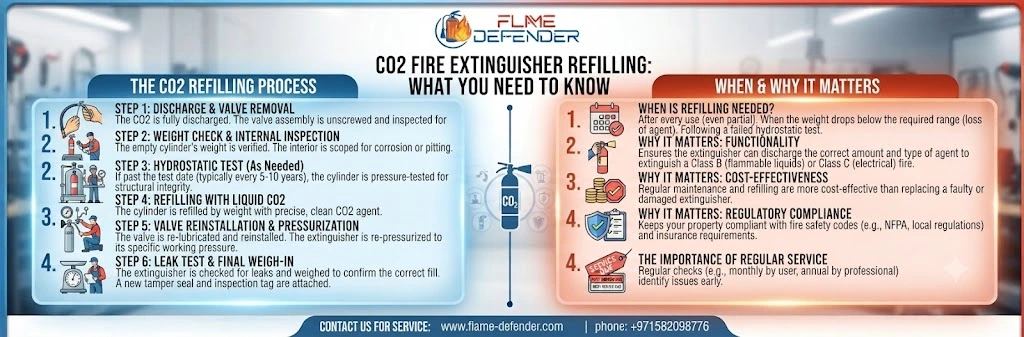
The CO2 Refilling Process (Step by Step)
If you’re curious what actually happens when you send your extinguisher for a refill, here’s a simplified breakdown:
- Inspection – the technician checks the cylinder body, valve, hose, and nozzle for damage or corrosion.
- Weighing – the cylinder is weighed to confirm how much gas remains versus the rated full weight.
- Discharge (if needed) – any remaining gas is safely released.
- Hydrostatic testing (if due) – the empty cylinder is pressure-tested to confirm it can safely hold gas again.
- Refilling – the cylinder is filled with the correct amount of food-grade or industrial CO2 gas using calibrated equipment.
- Sealing and tagging – a tamper-proof seal and a service tag with the refill date are added.
- Final inspection – a last check ensures the valve, seal, and pressure are all in order before it’s returned to you.
Why Professional Refilling Matters
CO2 cylinders are pressurized vessels, and refilling them isn’t a DIY job. Using the wrong equipment, incorrect gas quantity, or skipping the hydrostatic test can turn a safety device into a hazard. A poorly refilled cylinder can leak, under-perform during a real fire, or in rare cases, become structurally unsafe.
This is why it’s important to choose a certified and experienced fire extinguisher refilling service in Pakistan rather than an unverified local vendor. A professional service will:
- Use calibrated, accurate refilling equipment
- Follow proper safety and pressure-testing protocols
- Provide proper documentation and service tags
- Offer pickup and delivery for bulk commercial clients
- Refill all extinguisher types — not just CO2 — under one roof
If you’re looking for a reliable option, Flame Defender offers professional fire extinguisher refilling services across Pakistan, covering CO2, dry powder, and foam extinguishers for homes, offices, factories, and commercial buildings.
Cost of CO2 Fire Extinguisher Refilling in Pakistan
Refilling costs vary depending on the cylinder size (in kg), the current condition of the unit, and whether hydrostatic testing is due. Smaller CO2 units used in offices are generally more affordable to refill than larger industrial cylinders used in warehouses or factories. It’s always best to request a quote directly from a refilling provider, since prices can differ based on city, cylinder size, and service type (drop-off vs. pickup).
Tips to Extend the Life of Your CO2 Extinguisher
- Store it in a cool, dry place away from direct sunlight
- Avoid placing it near heat sources or in extremely humid areas
- Don’t tamper with the safety pin or seal unless it’s an emergency
- Schedule annual inspections even if it “looks fine”
- Keep a maintenance log with refill and inspection dates
Frequently Asked Questions (FAQs)
1. How often should a CO2 fire extinguisher be refilled? A CO2 extinguisher should be inspected annually and refilled immediately after any use. Hydrostatic testing of the cylinder is typically required every 5 years.
2. Does a CO2 fire extinguisher expire? The gas itself doesn’t “expire,” but pressure loss over time and cylinder wear mean it should still be checked yearly and refilled or replaced as needed.
3. How do I know if my CO2 extinguisher needs a refill? Check for weight loss compared to the rated full weight, visible damage to the cylinder or valve, or an outdated service tag. Any use, even partial, requires a refill.
4. Can I refill a CO2 extinguisher myself? No. Refilling requires pressurized equipment, calibrated CO2 gas filling systems, and hydrostatic testing tools that only certified technicians should handle.
5. How much does CO2 fire extinguisher refilling cost in Pakistan? Cost depends on cylinder size and whether pressure testing is needed. It’s best to request a quote from a local refilling provider for an accurate price.
6. What’s the difference between refilling and replacing a fire extinguisher? Refilling reuses the existing cylinder after inspection and re-pressurizing, while replacement means getting a brand-new extinguisher — usually needed if the cylinder fails a safety or pressure test.
7. Is CO2 better than dry powder for fire extinguishers? CO2 extinguishers are ideal for electrical and equipment fires since they leave no residue, while dry powder extinguishers are more versatile for general use across multiple fire classes.
8. How long does the refilling process take? A standard refill with inspection usually takes a short turnaround time, often same-day or within 24–48 hours, depending on the service provider and cylinder condition.
9. Do commercial buildings in Pakistan need certified fire extinguisher refilling? Yes. Most commercial buildings, factories, and offices are required to maintain fire safety equipment as part of civil defense regulations and insurance compliance.
10. Where can I get fire extinguisher refilling services in Pakistan? Certified providers like Flame Defender offer fire extinguisher refilling services across major cities in Pakistan, including pickup and delivery for businesses.
Final Thoughts
A fire extinguisher is only as reliable as its last inspection. For CO2 extinguishers especially, regular refilling and testing isn’t just a formality — it’s what ensures the device actually performs when it matters most. Whether you’re managing a single office extinguisher or a fleet of industrial cylinders, staying on top of your refilling schedule keeps your building, employees, and assets protected.
If it’s been over a year since your last inspection, now is a good time to get your CO2 fire extinguisher checked and refilled by a trusted professional service in Pakistan.